
Buy DSIP (5mg) Online
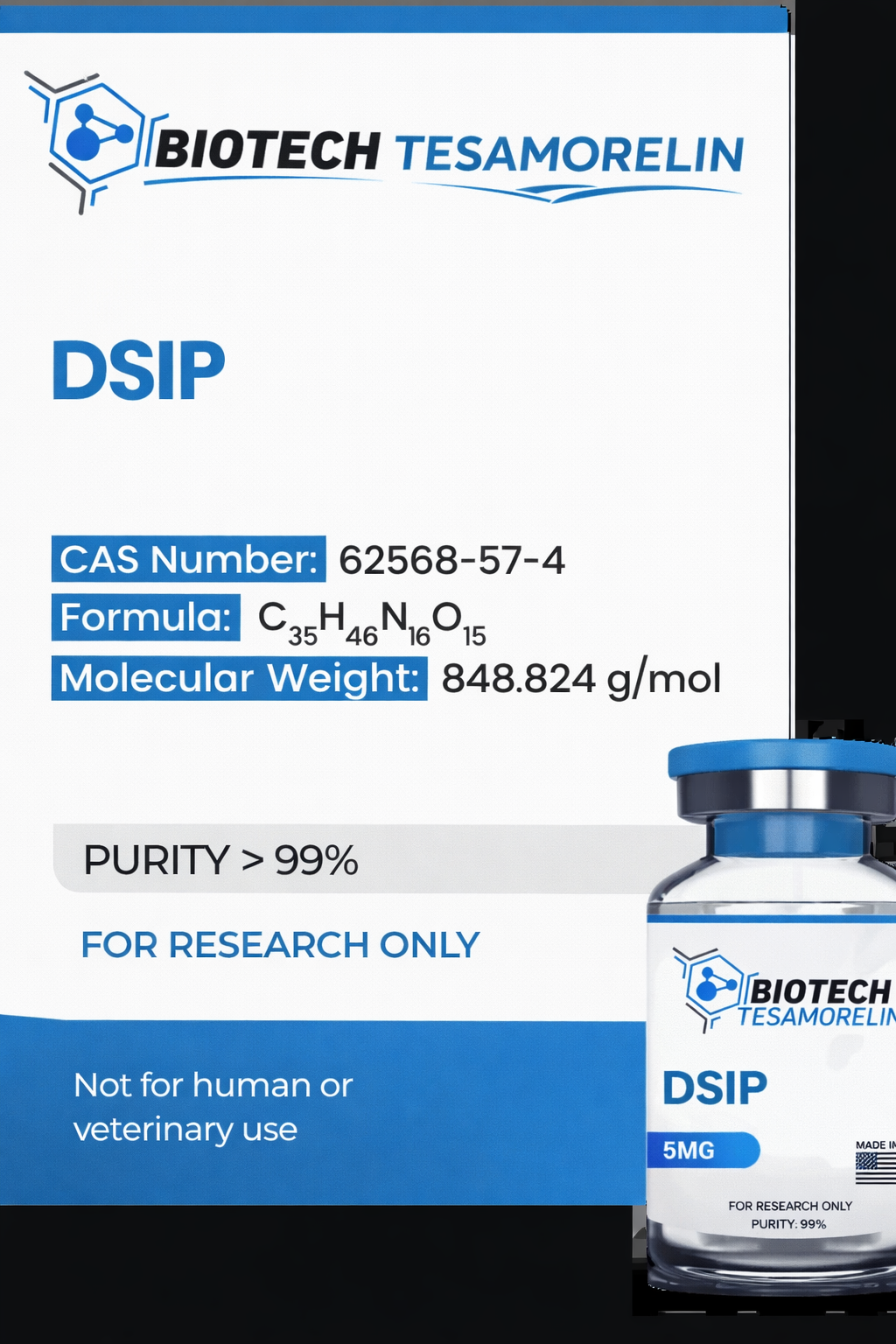
Buy DSIP (5mg) Online. DSIP is a naturally occurring neuropeptide made of 9 amino acids that may influence diverse endocrine and physiological pathways involved in the central nervous system. DSIP is of key interest as it was developed to help combat oxidative stress and normalize myocardial contractility. The peptide is considered a potential research candidate in studies of major depressive disorder. Delta sleep-inducing peptide (DSIP) is a naturally occurring peptide of short length. The molecule’s name came about due to researchers’ speculation of its potential to induce sleep in rabbits and because it was first isolated from the brains of rats during slow-wave sleep (in 1977).[1] Slow Wave Sleep (SWS), often referred to as deep sleep, is considered a pivotal phase within the overall sleep architecture, which is composed of non-rapid eye movement (NREM) sleep and rapid eye movement (REM) sleep. Sleep architecture itself exhibits a cyclical pattern, typically oscillating between NREM and REM phases multiple times throughout the duration of total sleep. Predominantly classified under the NREM sleep category, SWS is characterized by its distinctive low-frequency, high-amplitude delta brainwaves, as observed in electroencephalogram (EEG) recordings. The sleep cycle initiates with NREM sleep, which is further divided into three phases: N1, N2, and N3. The initial stages, N1 and N2, represent lighter sleep phases, whereas N3, equated with SWS, signifies the deepest phase of sleep. Upon completion of the deep sleep phase, the cycle transitions to REM sleep, marked by heightened brain activity and dreaming. Researchers have gradually explored its function in different endocrine and physiological roles. In addition to its potential influence on sleep patterns, DSIP appears to influence levels of corticotropin, inhibit the production of somatostatin, reduce stress hormone secretion, maintain normal blood pressure, alter sleep patterns and also may impact pain perception.[2]
Specifications
Other Known Titles:Delta Sleep-Inducing Peptide
Molecular Formula: C35H48N10O15
Molecular Weight: 848.82 g/mol
Sequence: Trp-Ala-Gly-Gly-Asp-Ala-Ser-Gly-Glu
DSIP Research
DSIP and Potential Mechanisms
DSIP is purported to influence the structure and quality of sleep through its interactions with the central nervous system. It is speculated that DSIP may shorten the onset of sleep and enhance sleep quality by modulating the activity of several neurotransmitters in the brain. However, the precise mechanisms and pathways by which DSIP operates remain unclear.
One hypothesis suggests that DSIP targets specific receptors that play a pivotal role in its actions. These receptors include the N-methyl-D-aspartate (NMDA) receptors and gamma-aminobutyric acid (GABA) receptors. NMDA receptors are associated with glutamate, an essential excitatory neurotransmitter in the brain, while GABA receptors are linked to inhibitory neurotransmission, which is considered crucial for reducing neural activity and inducing a relaxed state. Experimental studies on murine models indicate that DSIP may enhance the inhibitory actions of GABA, thereby reducing neural excitability and facilitating the onset of sleep.[3] These studies also suggest that DSIP could attenuate the excitatory actions of NMDA receptors, further contributing to its sleep-promoting properties.[4]
Moreover, research points to a possible interaction between DSIP and opioid receptors in the brain, which may play a role in the peptide’s ability to regulate sleep and mitigate withdrawal symptoms, underscoring its intricate role in neural signaling pathways.[5,6] Additionally, the alpha 1-adrenergic receptor, located in the pineal gland, has emerged as a potential target in DSIP-related research. Preliminary findings suggest that DSIP’s modulation of this receptor may influence sleep patterns and possibly aid in stress management, given the receptor’s significant consideration in stress response processes. These insights emphasize the complex and varied potential ways in which DSIP might impact sleep and stress, though further investigation is essential to fully delineate its biological functions and research potential.[7]
DSIP and Stress
In one scientific investigation, the action of DSIP on murine models subjected to controlled stress scenarios has been explored.[4] This inquiry largely examined the variations in levels of substance P, beta-endorphin, and corticosterone—key biomarkers relevant for decoding the stress response and the potential regulatory actions of DSIP. Preliminary results indicated that exposure to DSIP may lead to significant alterations in the concentrations of these indicators, which may imply a role in modulating stress. Specifically, an initial reduction followed by a substantial increase in beta-endorphin levels was observed, a pattern that suggests DSIP’s impact on the opioidergic system, potentially playing a role in stress alleviation or adaptation processes. Furthermore, a reduction in corticosterone levels was recorded soon after exposure to DSIP. These observations suggest that the actions of DSIP on substance P, beta-endorphin, and corticosterone are indicative of a wider array of biochemical modifications, proposing that DSIP may trigger a cascade of molecular events that may facilitate its stress-modulatory functions
Be the first to review “DSIP (5mg)”
Related products

Peptides
Peptides
Peptides

Peptides
Peptides

Peptides
Peptides
Peptides
Reviews
There are no reviews yet.